Ask any mother and they will tell you that they would do anything for their children. Even if that means making sacrifices on others’ behalf, when push comes to shove.
Concerned that there isn’t enough room for her baby, a 33-year-old expecting woman decided to see whether her stepdaughter, who’s been living with her and her dad, would be fine living elsewhere. In other words, moving out. When this didn’t work out, sensing that her husband won’t be much help, u/Sharp_Candy_513 took matters into her own hands and tried to talk to her stepdaughter one-on-one, woman-to-woman. Thinking that she’s been misconstrued by everyone, creating an “awkward and uncomfortable” environment in the household ever since, she took to the “Am I The [Jerk]” community to see what the good people of the internet make of this.
When there’s a baby on its way, some mothers naturally expect there to be extra space ready for them

Image credits: Karolina Grabowska (not the actual photo)
But when the only available room is already occupied by a stepchild, the situation can become rather uncomfortable
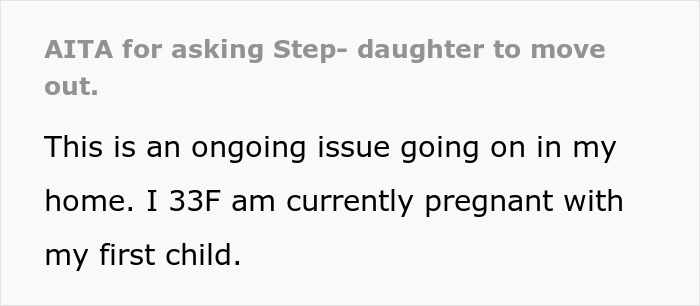
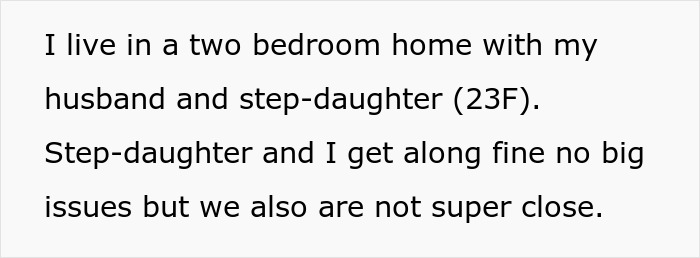

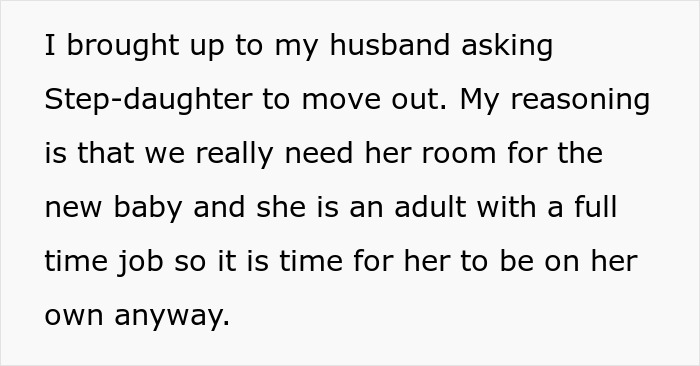

Image credits: SHVETS production (not the actual photo)

Image credits: Sharp_Candy_513
In this day and age, most adult kids move out later than previous generations due to sky-high inflation
Since the pandemic, the housing market and the world itself has changed significantly. Rent got harder to cover, along with increasing food prices. And when you can study or work from home, it’s only understandable why many will opt to put their independence on hold in order to save some money or pay off student debts. Hence, the 2.9 million young adults in the US, the so-called “boomerang kids”, who went back to living with their parents in the wake of the pandemic – a drastic increase from8% in 1971 to 17%in the span of 50 years – where nearly two thirds (or 62%) of them say they simply can’t afford to move out.
While most people will agree that no one can blame young people for being sucker-punched by the economic instability created by the pandemic; some parents are not too happy about it. For one, this can impact parents’ dreams of retirement. According to the Thrivent survey, 35% of American parents who have adult children returning home have made the difficult decision to tap into their savings meant for long-term objectives like retirement or housing. Additionally, 26% of these parents find themselves unable to pay off debts or save for immediate goals due to the financial support they provide to their adult children. Pandemic or not, the return of children into the household disrupts the established routines and encroaches upon the newfound freedoms that parents acquire after their kids move out.
Image credits: MART PRODUCTION (not the actual photo)
Turns out, leaving the familial “nest” not only promotes the independence of children but also yields benefits for their parents
Another issue that this presents is evident in u/Sharp_Candy_513’s parental conundrum. Normally, parents would typically rejoice at the prospect of their adult children leaving the comfort of the “nest” and embracing their newfound independence. This transition not only signifies a significant milestone for the children but also offers psychological benefits for both parents and kids alike, it turns out. As highlighted in a 2018 study conducted by the University of Utah, parents between the ages of 50 and 70, commonly known as “empty-nest” parents, reported being 5-6% more likely to experience a high level of happiness compared to those who still had children residing at home.
The ripple effects of this familial evolution extend far beyond the walls of the parental home, however. Society at large witnesses the emergence of a generation whose independence, resilience, and self-determination are, in a way, put on hold. According to Pew Research Center, around 36% of Americans say that more young adults living with their parents is “bad for society,” with 16% saying it’s perfectly appropriate. And while some are quick to blame their financial illiteracy, only a few consider the ongoing inflation in the US, hitting a 40-year high of 9.1% last year. Considering this, it’s only understandable why people didn’t support the author’s eagerness to kick out her stepdaughter.
Image credits: Ömürden Cengiz (not the actual photo)
People often forget to put their needs aside for a moment to hear what’s being asked from them in return
But what happens when you have to find a sweet spot between throwing your now grown-up (step) child overboard, despite the economic situation being completely in the toilet, and sacrificing your own personal space because there’s only so much room in the house? As we can see from the mixed verdict of the r/AITA community, it depends on whom you ask.
WhenWe reached out to Robert Taibbi, a practicing clinician and the author of “Brief Therapy with Couples & Families in Crisis,” and asked him to weigh in on the conundrum, he argued that the parents were too focused on their needs and not the child’s. “What motivates others are their goals, their problems – not yours,” Taibbi said, emphasizing the importance of letting them know that you’re there for them at every step. “Talk about moving out, what support you might provide — help find a place, help with moving, offer furniture, help pay for rent, etc.”
Of course, most parents will relate when it comes to their kid leaving the ‘nest’, part of you will try to do everything in your power for them to stay just a bit longer. As Helen Schulman, an American novelist, once wrote for The New York Times: “Believe me, I know in real life we can’t protect our kids forever and, in profound ways, we never really could; it just felt like that, and I liked the feeling, deluded or not.” Alike Schulman, it was possible that the father in this story, u/Sharp_Candy_513’s spouse, had his own ulterior motives for his decision.

Image credits: Vantha Thang (not the actual photo)
One of the most challenging parts of being a parent is letting them go out into the wide world, only to see them return after college
According to Taibbi, this is a completely understandable, almost universal emotion. “Children moving out can be a source of relief, worry, or sense of loss,” he said. “For couples who were child-centered and had their couple relationship wither over the years, this can be a time of challenge, the child is no longer the glue holding them together. This is where couples may argue more or more likely drift into parallel lives. Good time to work on the relationship, seek some form of counseling.”
A considerable number of parents face challenges in striking the right balance between holding onto their children and allowing them to become independent, knowing when to actively engage and when to exercise patience. If you fall into this camp of attachment style, there are a few things to consider. First, Taibbi says, remember the things you always dreamed of doing but indefinitely postponed due to parenting duties. For instance, why not fulfill your long-standing dream of taking a vacation in the Bahamas?
Therefore, it may not be surprising to learn that a substantial majority of parents, approximately 4-in-5 (or 80%), expressed their willingness to warmly welcome their children back home after they graduate from college, as indicated by a study conducted by the Pew Research Center. However, once the initial excitement of their return subsides, things can become a bit complicated. That’s why Taibbi recommends the importance of establishing a shared understanding of expectations between both parties involved.
“While the child sees himself as an adult, it’s easy for the parents to still slip into old more micromanaging parenting roles. The child needs space and privacy,” he argued, “but the parents need to be treated with consideration. This can be about cleaning up behind yourself, or agreement that we’re not eating dinner together every night, or about paying rent or letting the parents know if you’re staying out late so they don’t worry.” Of course, this might be particularly tricky for stepparents, so not to become the ‘wicked stepmother,’ it’s important to be on the same page with their biological parent – no matter what you decide on.
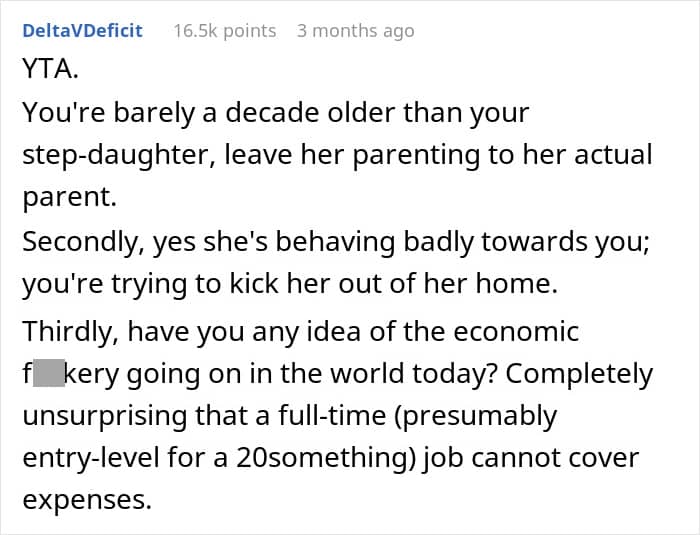
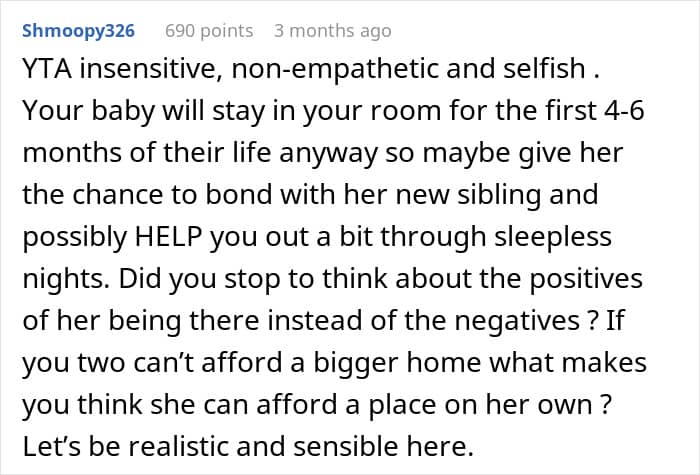
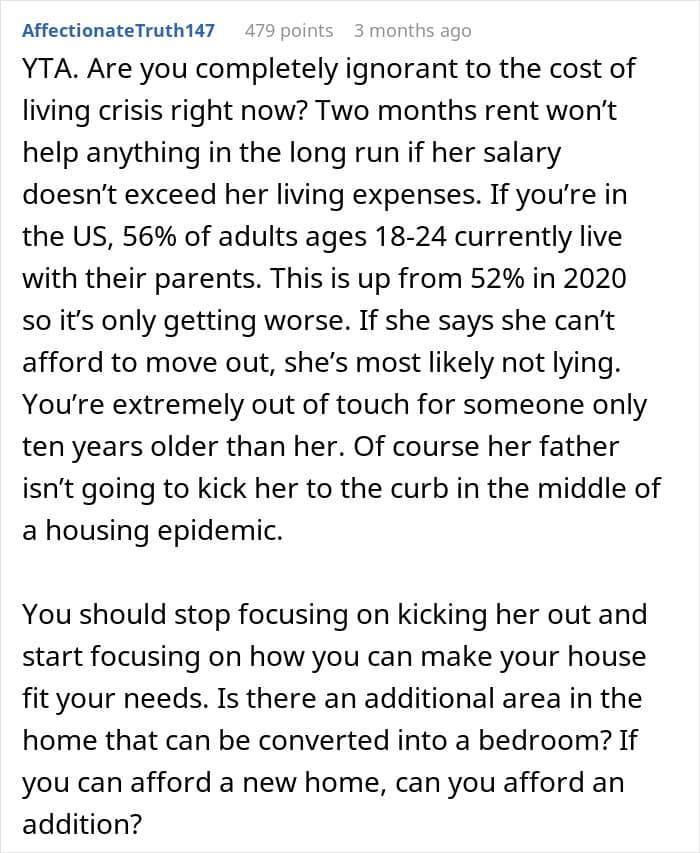
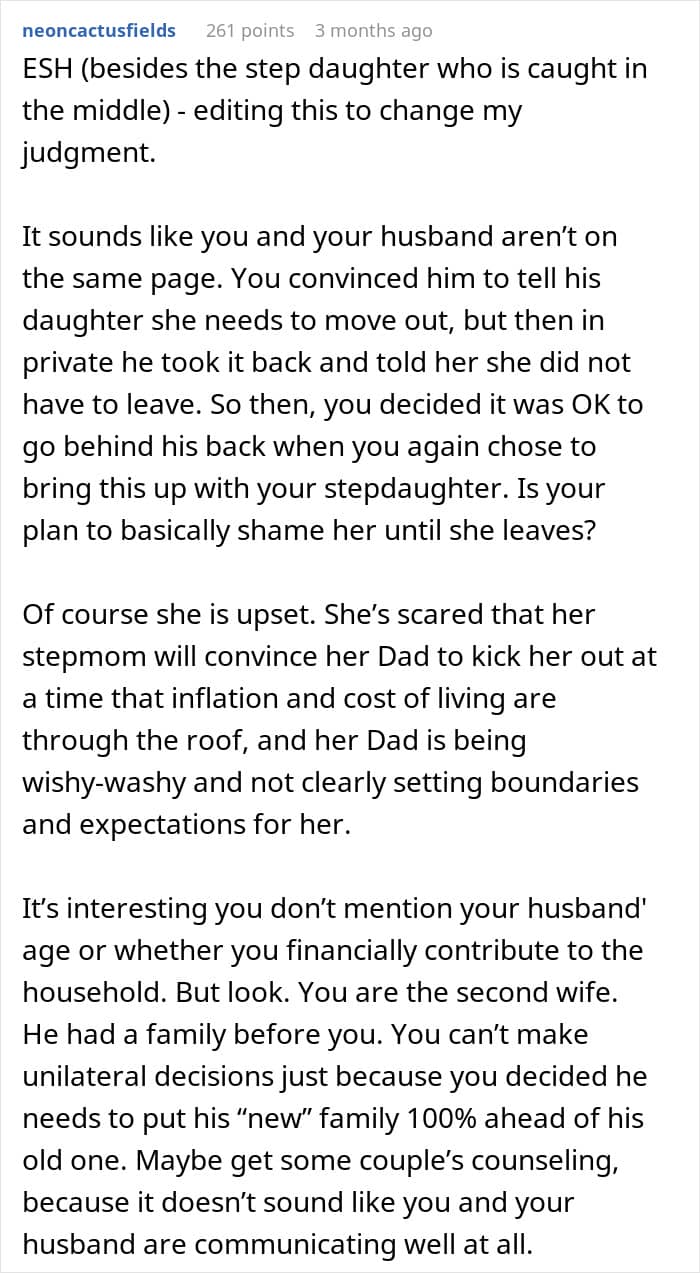
People did see the author’s point but thought she was being very inconsiderate toward her stepdaughter



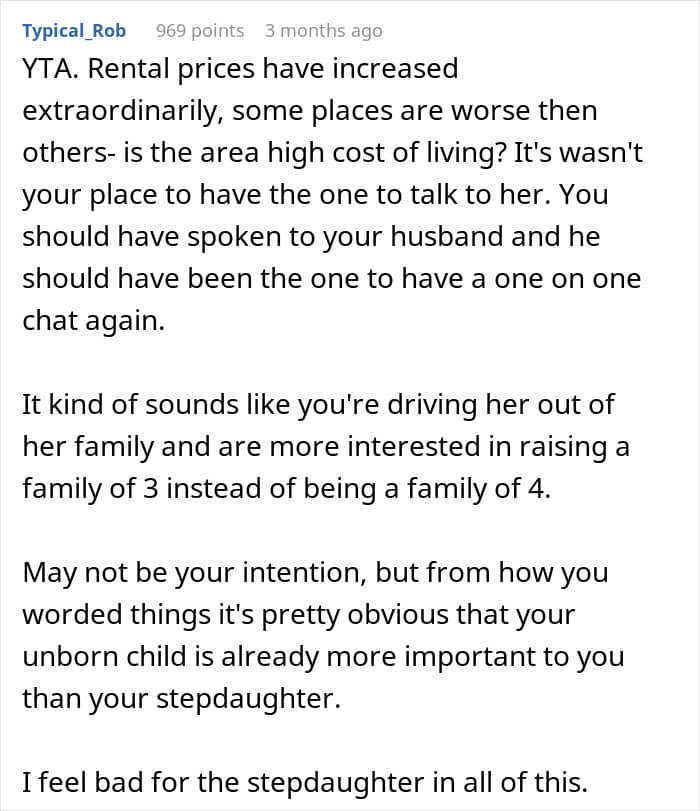
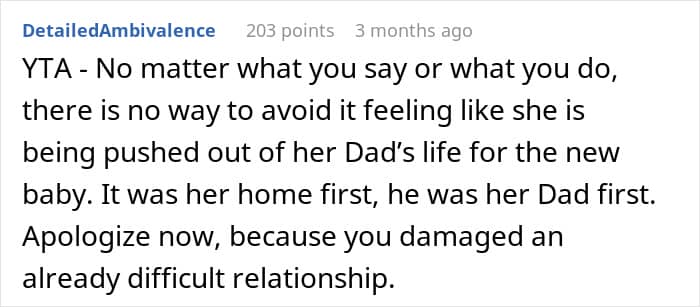
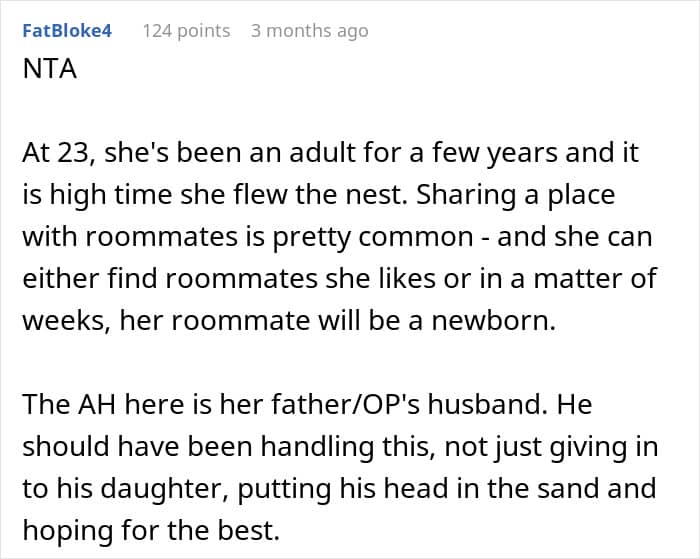
On the other hand, many believed that the father could have been more involved in the entire situation
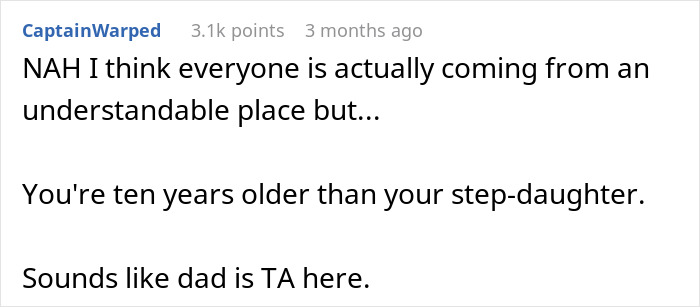


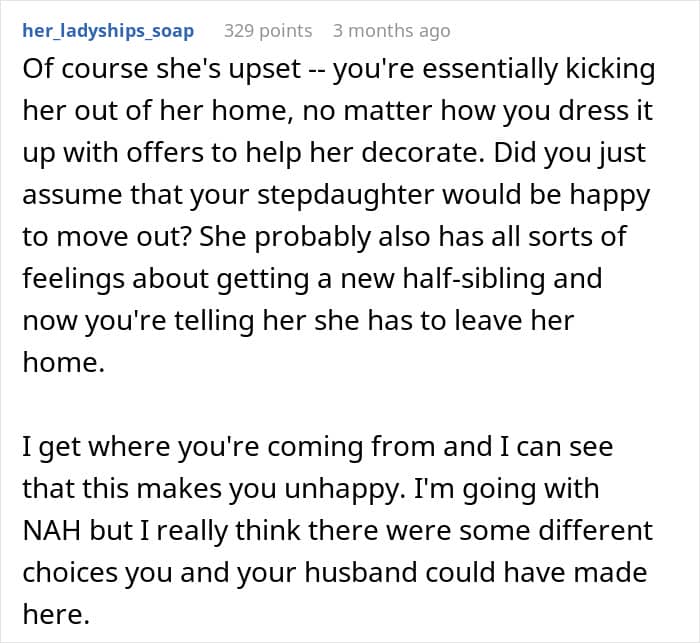
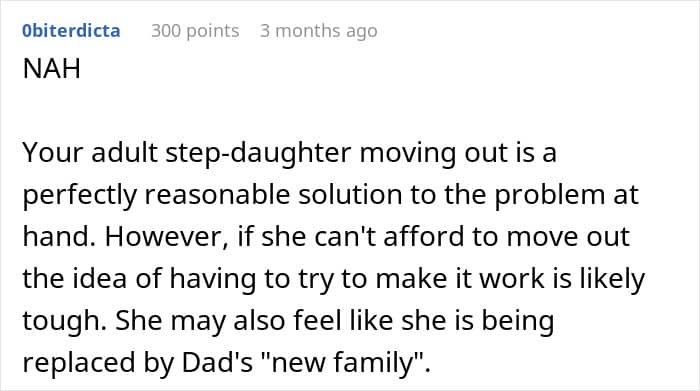

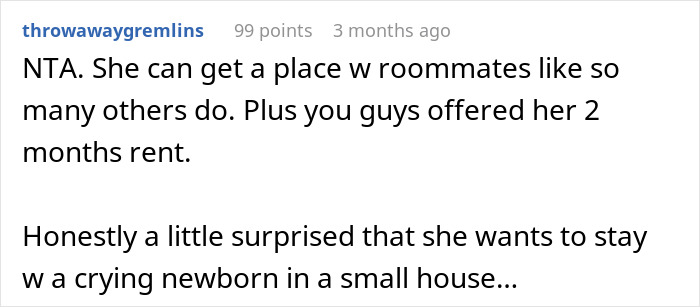
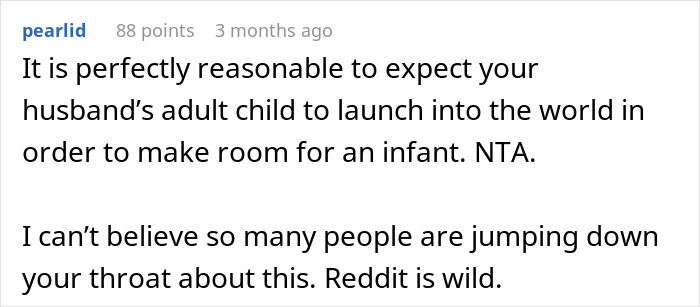
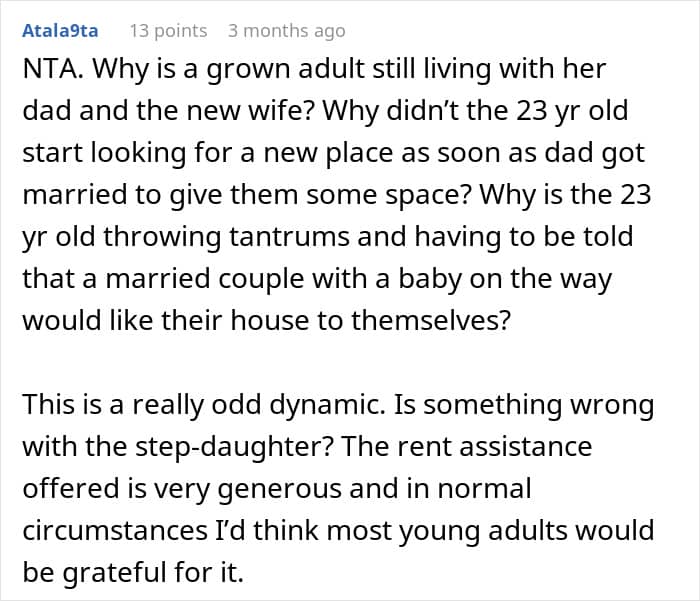
Some, however, sided with the soon-to-be mother and said she’s doing the right thing