Therapy can be life-changing. It can help you make sense of the past, embrace your complex feelings, and give you a fresh new perspective centered on growth. However, just because you walk into a mental health professional’s office does not mean that they’ll ‘solve’ all of your issues in a week. Therapy is an involved process that requires a lot of heavy emotional work.
One internet user recently sparked a very important discussion on the r/AskWomen subreddit, after they asked everyone to share the ‘ugly truths’ they struggled to come to terms with in therapy. Many users found this vulnerability to be empowering. Read on for their most open and honest stories.
#1
That I have to put in work to heal the trauma caused by someone else.
#2
That no one is coming to save you, gotta put your big girl pants on and save yourself.
#3
Sometimes you will never get an answer to questions you have, no matter how insane it drives you, and you just have to move on.
Therapy and mental health issues are still taboo topics in some cultures and households. The sad reality is that many people are discouraged from seeking professional help when they need it. Or they’re too afraid to ask for help because they don’t want to be seen as weak.
Loren Soeiro, Ph.D., points out in a post on Psychology Today that there are a few key anti-therapy attitudes that are prevalent in society. For instance, some people feel that they’d rather talk about their issues with their friends. However, a therapist is very different from a BFF: they actively look for the sources of the problem and can offer you deep insights into your behavior, thoughts, and feelings.
#4

Other people’s emotions are not my responsibility.
#5

I talk to myself in such a mean hateful way, that I would never dare talk to another living person. I tend to show grace to everyone except myself. I’m my own worst critic and it’s self defeating
#6
Even though there will be friends and family around, I am still an individual, and I need to start accepting that being alone is good. Being alone doesn’t need to feel lonely.
Others might claim that they don’t have the time for therapy or that it’s far too expensive for them. However, you really can’t put a price on good mental health. If there are deep-seated issues that negatively affect your daily life, it’s vital to tackle them. Ignoring the problems will only make things worse as time goes by. It’s not a question of time and finances. It’s a question of priorities and motivations.
In the meantime, it’s essential that you find a therapist who is a good fit for you. It’s entirely possible that you’ve had bad experiences or didn’t find a professional whom you ‘clicked’ with. Finding the right person will take some time, but it’s well worth it. Ideally, you’ll find someone you can work with for years (and possibly decades).
As we’ve noted on We before, a trustworthy therapist is someone who will focus entirely on you during your session. Quality therapists are professionals who are punctual, and consistent, and won’t put the spotlight on themselves.
#7
Sometimes moving on without that apology you want so bad is better than trying to get it. Some people just can’t give a sincere apology for the pain and trauma they caused.
#8
You have worth even if you contribute nothing. You shouldn’t have to prove your value. And your self esteem should not be based solely on how others perceive you.
#9

I will never get the approval of my parents
Though therapy is important, it is not the only way to take care of your mental health, embrace harsh truths, and work through messy emotional issues. It’s equally as important that you have a strong support system around you. A supportive social circle, filled with family and friends whom you can trust, can grant you the stability that you need to heal and thrive.
In the meantime, it’s important to remember that we’re not just mental beings but physical ones, too. That’s why self-care should be a priority, too. That means having a consistent exercise schedule. It means eating healthy food and avoiding junk, as well as limiting your intake of alcohol, nicotine, and caffeine. It means spending time in nature, getting plenty of rest,meditating, and finding the time for hobbies you genuinely love. It doesn’t quite matter what you do (whether it’s hiking, tennis, painting, or yoga), so long as you’re active, you love the activities, and you develop a routine.
#10
That my disease isn’t curable. I am NOT going to improve, I have to quit waiting on better days to start enjoying my life because those days are never ever coming. This is my new permanent life, this is my new normal & even after several years of being sick I can’t really accept it.
#11
That my mother will never be the person I need her or want her to be, and I have to let go of that dream of her which I created. I can keep her in my life or cut her out of it, but only by accepting her for who she is and letting go of the fiction.
#12
That I don’t do nice things for others because I’m a “nice” person but that I do it in a self-serving manner to keep myself “safe.” Growing up I worked tirelessly doing nice things for my alcoholic mother so she wouldn’t hurt me and now as an adult compulsively I do nice things for others so that I won’t be rejected by them.
#13
People in general don’t have has much empathy and compassion for others at the level that I do. That’s been the hardest thing for me to accept.
#14
That I have PTSD because my life has been full of trauma.
Felt terrible when I first heard it. Surely the “trauma” label must be for people who had it worse than me?
Feels much more realistic and objective now that I’ve been treated by a therapist who specializes in PTSD. Yes, what I went through was trauma. And yes, it left its mark on me.
#15
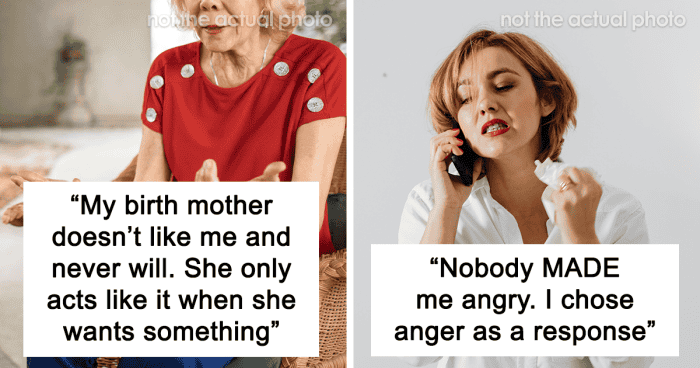
That nobody MADE me angry. I chose anger as a response.
#16
That my parents emotionally neglected me. More and more memories of how what I needed was so lacking keep coming up and it hurts to accept that they either didn’t care or didn’t have the energy for me
#17
No one owes you love, even if they’ve said they loved you before… people change, feelings change, it happens.
It’s a hard truth.
#18
That my parents we’re emotionally abusive, and that my emotional regulation and anger management issues stem from being raised in an emotionally reactive household.
#19
My birth mother doesn’t like me and never will. She only acts like it when she wants something.

I date men just like my dad
#21
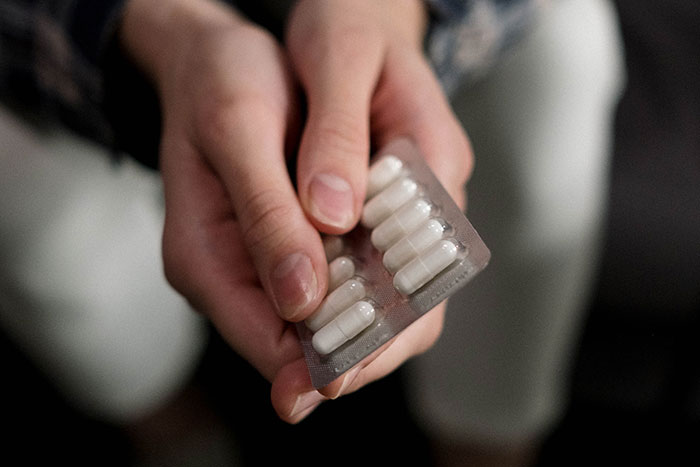
Medication will not make me better, it is just there to help me keep going.
#22
When my mom died, I realized through therapy, that I wasn’t mourning the loss of my mother, but the realization that she had never been one, and her death made that definite. I’m honestly still taken aback by that one, years later.
#23
That I was not a “low effort kid”. My parents raised me in such a way that i just, stopped having needs because it was easier than expecting them to meet them. It’s still hard for me to admit that I have needs sometimes, and to admit that I feel pain because I feel they weren’t met.
I’m still working on the part where I’m ugly and unlikeable and nobody will ever really love me. That one is tough.
#24
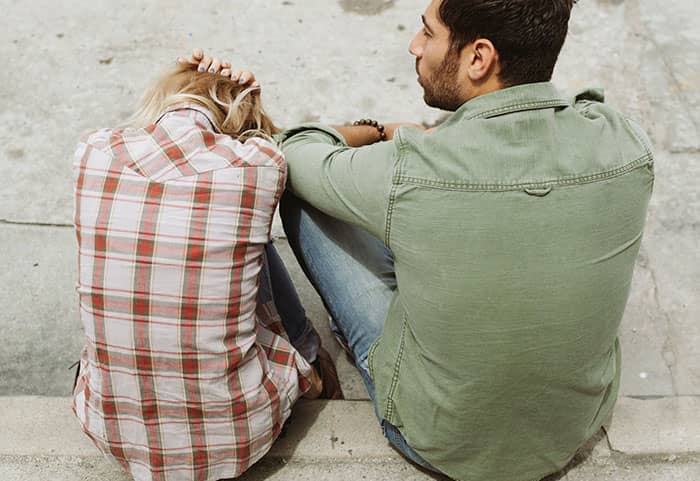
That I have developed codependency and it has pretty much wrecked how I view my relationships and how I act towards myself.
Oh and also, how trauma has affected the way I view people’s tones of voice and facial expression. This has caused me to be hyper aware of body language. It can be a good and bad thing depending on how you look at it. I can easily pick up when someone is uncomfortable, not saying everything they mean to, are keeping a secret, lying, etc. But it also makes me overthink and over analyze HAHA.
#25
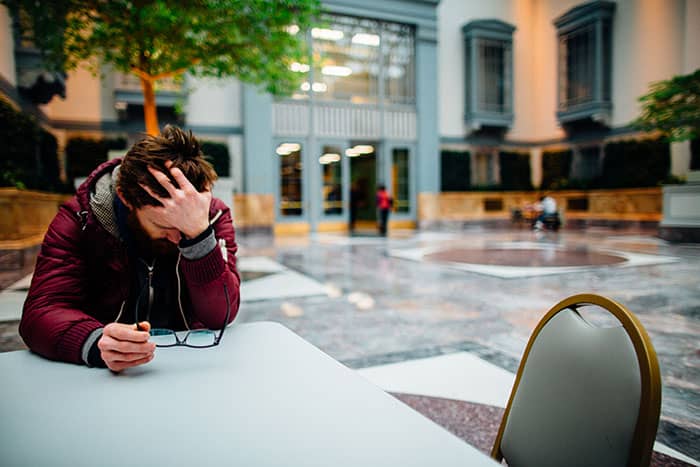
The reason my mean friends from 13 still effect me today isn’t just because I struggled to get over it, but because everyone in my support circle (family, other friends, etc) didn’t believe me or made it feel like it was my fault for not telling them until after I left that friendship
#26
Someone who is emotionally unavailable can often make someone who is emotionally available feel like their basic needs are too much.
#27
that if I want to heal I have to stop seeing myself as a victim. yeah some bad s**t happened but I can’t carry that and let it affect other people because ive victimized myself and am waiting for someone to come to my rescue
#28

It doesn’t matter why someone did something, what matters is they did and how I feel about it.
I spent too much time agonizing over whether certain people realized they were being abusive at the time or if they were too stupid/imbalanced to realize it. Doesn’t matter. Nothing excuses being abusive to another person, especially if that person is a child in your care. Having your own mental health issues isn’t an excuse to abuse others.
Also my therapist wanted me to reparent my inner child and I have zero concept of how a good parent would treat a child and the idea of treating my inner child kindly freaks me the f**k out. I never got to be a kid and the idea of letting myself act childish is very upsetting.
#29
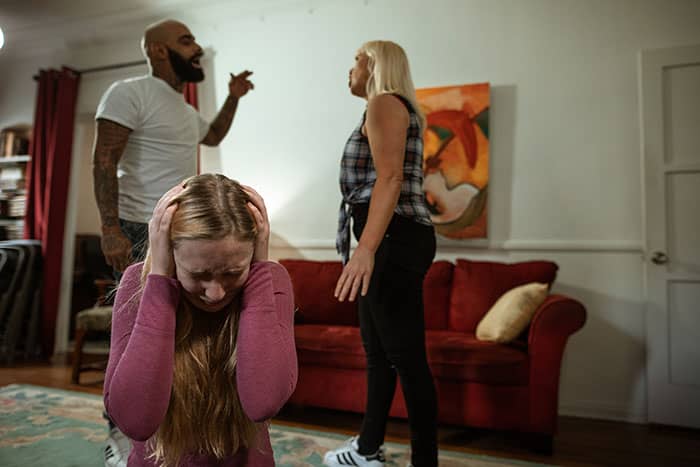
That my parents (mostly my mother) were/are emotionally immature and abusive. It was so normalised my whole childhood, I knew they weren’t great parents but I didn’t realise the amount of trauma I experienced until it surfaced in therapy.
#30

That my father in fact did not love me and actually committed real crimes against me. I’m not sure which was harder to accept.